
Everything You Need to Know About Motorcycle Chain Lubrication
One crucial part of maintaining your ride? Motorcycle chain lubrication.
No matter whether you’re flying through the desert on your scrambler, zipping around the neighborhood on your Honda Monkey, or hitting one of the 40 best motorcycle routes in the USA, a well-maintained motorcycle chain is essential.
Doing so enhances your bike’s performance, extends its lifespan, and also ensures your safety as a rider. Wondering why and how you can make sure your motorcycle chain stays up to the task?
Keep reading as we’ll cover everything you need to know:
- Why Chain Maintenance Matters
- What Causes a Chain to Wear?
- Traditional Motorcycle Chain Lubrication
- Automatic Chain Maintenance Methods
Why Motorcycle Chain Lubrication Matters: The Importance of Chain Maintenance
The motorcycle chain is the unsung hero of your bike. But before we dig into the maintenance side of things, let’s take a step back and look at why your bike has a chain to begin with. (Then we’ll get to the part about which chain lube to use and more.)
Every motorcycle has a final drive that works to move the bike forward. They are split into three broad categories, depending on the type of bike: chain drive, belt drive, and shaft drive. Chain drives are the most common type of final drive for a multitude of reasons, largely related to performance and longevity.
Here’s what you need to know:
- In your transmission, the chain and sprockets form a direct mechanical link between the engine’s output and the rear wheel. A well-maintained chain ensures consistent power transfer and prevents loss caused by slack or wear.
- Sealed chains, like an O-ring, X-ring, or Z-ring, have rubber rings between the inner and outer plates to seal in lubrication and keep out dirt and debris. However, they still require regular cleaning and lubrication to keep sprockets from wearing down—which can ultimately lead to your chain snapping (not good).
- There are a number of different ways to maintain your chain, which we’ll get into a bit later in this post. Motor oil, although not specifically designed for chains, can be used in a pinch to lubricate and clean the chain, reducing friction and wear.
Put simply: lack of proper maintenance leads to increased wear, power loss, and potential safety hazards. On the flip side, a well-lubricated chain reduces friction, heat, and ultimately extends the longevity of your bike.
Importance of Chain Maintenance
Neglecting your chain can lead to safety issues, reduced performance, and costly repairs. Regular maintenance involves cleaning, lubricating, and inspecting the chain to prevent corrosion, wear, and damage.
Benefits of Regular Chain Maintenance
Regular chain maintenance offers several benefits that can enhance your riding experience and save you money in the long run. Here are some key advantages:
- Extended Chain Life: Proper maintenance can significantly extend the life of your motorcycle chain, reducing the need for premature replacement. This means fewer expenses and more time enjoying your ride.
- Improved Performance: A well-maintained chain ensures optimal power transfer from the engine to the rear wheel, providing a smoother and more responsive ride. You’ll notice better acceleration and overall performance.
- Reduced Wear and Tear: Regular maintenance helps reduce wear and tear on other components, such as sprockets and gears. This can prevent costly repairs and keep your bike running smoothly.
- Enhanced Safety: A well-maintained chain reduces the risk of accidents caused by chain failure or malfunction. Ensuring your chain is in good condition can provide peace of mind and a safer riding experience.
By incorporating regular chain maintenance into your routine, you can enjoy these benefits and keep your motorcycle in top condition.
What Causes a Chain to Wear More Quickly?
Chain wear is a completely normal part of your bike’s existence, but that doesn’t mean it should be neglected. Not unlike your car that requires regular oil changes, chain maintenance is simply a part of being a responsible bike owner.
There are a number of factors that influence chain wear. Some of the biggest are:
-
- Chain tension
- Riding conditions and environmental impacts (Are you on a highway or in the dirt? Is it a snowy day or dry?)
- Riding style and type of engine
- Mechanical issues rooted elsewhere in the bike
- Chain and sprocket quality
- Improper lubrication: too much or too little, which can lead to wear on both the chain and the rear sprocket

What About “Stretched” Chains?
Once a chain has started to wear, it functionally “stretches”. You likely won’t be able to see this if you were to put a “used” chain next to a new one without pressure, but you will certainly notice the difference when they are under the load of the bike.
It can be helpful at this point to understand where exactly the chain wears (say that 3 times fast!). First, remember that there is a pin connecting the inner and outer side plates. There is also a bush that is connected to the inner plate.
Due to the rolling action of the chain, the pins and bushings constantly rub against each other, causing wear over time. This wear occurs inside the bushing, leading to an increase in the space between the pin and the bushing. Remember the “stretch” we just mentioned? This is how that happens (even though the metal itself does not stretch). X ring chains also require regular maintenance to prevent wear and elongation.
Another critical factor to consider is that if a single chain link experiences excessive wear, it can compromise the entire chain. Chains and sprockets are designed to work together with even load distribution, but when a link elongates due to wear, it disrupts this balance.
So, instead of evenly sharing the load, the elongated link places extra stress on itself and surrounding components as it engages with the sprocket. This is known as “chain pitch elongation“, aka “chain stretch” which can lead to premature sprocket wear, poor power transfer, and ultimately failure.
{Want more Moto content? Sign up for our newsletter for the latest updates, new products, sales, and much more}
Traditional Motorcycle Chain Lubrication
At this point, it’s pretty clear that keeping your chain well maintained and lubricated is important. Here’s an overview of how you can do it.
While gear oil can be used for lubrication, it is not ideal for motorcycle chains due to issues like fling and the need for more frequent reapplication compared to specialized chain lubes.
Step 1: Getting Prepared
Start by removing the chain guard and any other components that may be obstructing access to the chain. This will give you a clear view and easy access to the entire chain.
Over time, particularly if you ride off-road, dirt, grime, and old lubricant can build up. Use a chain-specific cleaner (like Muc Off), a mild degreaser, or even kerosene to eliminate grime without causing damage to the seals on O-rings, X-rings, or Z-ring chains.
As you are cleaning, use a chain brush or an old toothbrush to scrub away any remaining grime. Pay particular attention to the rollers and pins, as these areas tend to accumulate dirt and debris.
Avoid using harsh chemicals or abrasive materials that can damage the chain. Don’t forget to rinse the chain with water until it runs clear. This will remove any remaining cleaner and dirt from the chain.
And finally, dry the chain with a clean rag or towel to prevent water spots. Ensuring the chain is completely dry before applying lube is crucial to prevent rust and corrosion.
Step 2: Add Lubrication
Once your chain is clean and dry, it’s time to add one of the many different lubes on the market to minimize friction between the pin and bushing; and prevent metal-on-metal contact.
You can use chain-specific lubes that are formulated to penetrate deep into rollers and bushings while also resisting fling-off. Make sure that you take care of this step in a well ventilated area. Don’t forget to wipe off the excess lube. Well oiled isn’t the same as too much oil.
Step 3: Adjust the Tension
As mentioned, chains stretch (elongate) due to wear, requiring periodic adjustment. Too much slack can cause the chain to jump off the sprockets, while too little slack increases wear on both the chain and sprockets.
Here’s a video touching on when it’s time to clean your chain as well as more detailed instructions on how to do so:
How Often Should a Motorcycle Chain be Lubricated?
The simple answer is: whenever it needs it. The video above shows some noises to listen for that may indicate the time has come. Your owner’s manual will also likely have suggestions, but given how much variance there is in terms of wear and tear due to riding style, weather, etc, we wouldn’t take much stock in their suggestions.
If you are looking for extremely general guidelines though, every 300–600 miles is an OK rule of thumb to keep in mind.
That said, some key indicators are when the chain appears dry or rusty, or whenever it looks dirty. Surface rust demonstrates that lubrication is insufficient or has worn off. And remember, if you ride in excessively wet or dusty conditions, you’ll likely need to lube your chain more often. Dry chain lube is ideal for dusty conditions and minimizes the need for frequent reapplication.
What Should I Use to Lubricate a Motorcycle Chain with Motorcycle Chain Lube?
Choosing the right chain lube is essential for maintaining your motorcycle chain. Here are some common types of chain lubes, each with its unique characteristics and uses:
- Dry Chain Lubes: Designed for high-wear applications, dry chain lubes provide long-lasting lubrication and protection. They are ideal for dry conditions and are suitable for road bikes and track days. These lubes minimize dirt accumulation, keeping your chain clean and efficient.
- Wet Chain Lubes: Perfect for wet conditions, wet chain lubes offer excellent lubrication and protection against water and mud. They are commonly used in off-road applications and are suitable for bikes exposed to harsh weather conditions. Wet lubes ensure your chain remains well-lubricated even in challenging environments.
- Wax-Type Chain Lubes: Wax-type lubes leave a protective white residue on the chain, providing long-lasting lubrication and protection. They are often used in dry conditions and are suitable for road bikes and track days. These lubes offer excellent resistance to dirt and debris, keeping your chain in top condition.
Selecting the right type of lube for your riding conditions can make a significant difference in the performance and longevity of your motorcycle chain.
A Few More Specific Options
Motorcycle-Specific Chain Lube (Recommended): Formulated specifically for motorcycle chains, providing long-lasting lubrication and protection. Motorcycle chain lubes are essential for maintaining motorcycle chains, preventing rust and reducing friction.
- Available in wet and dry formulations for different riding conditions.
- Most are O-ring safe, meaning they won’t degrade rubber seals.
- Best for: All motorcycles, including street, touring, off-road, and performance bikes.
Chain Wax: A thicker, more durable alternative to liquid lubricants. Maxima Chain Wax is a popular choice for its durability and effectiveness.
- Provides excellent protection against dirt, water, and rust.
- Takes longer to apply but lasts longer in harsh conditions.
- Best for: Off-road, adventure riding, and wet weather conditions.
Teflon/PTFE-Based Lubes: Contains Teflon (PTFE) or ceramic additives for low friction and minimal buildup.
- Less sticky than traditional chain lubes, reducing dirt accumulation.
- Best for: High-performance and sportbike riders who want minimal drag.
The Great Debate: WD-40 – Does it Work or Not?
One of the most debated topics in motorcycle chain maintenance is if WD-40 is a good chain cleaner or lubricant. Riders are split on its effectiveness, with some swearing by it and others warning against its use.
Why Some Riders Use WD-40
- Effective Cleaner: WD-40 works well to dissolve grime, old lubricant, and debris.
- Water Displacement: It repels water, preventing rust after a wash or wet ride.
- Readily Available: It’s inexpensive and easy to find.
Why Some Riders Avoid WD-40
- Not a Proper Lubricant: While WD-40 provides short-term lubrication, it is not designed to withstand the pressures and heat of a motorcycle chain.
- Potential O-Ring Damage: Some believe that WD-40 can degrade the rubber O-rings over time, although this is debated. This is because solvents do tend to seep past the O-rings and thin out the grease inside.
- Flings Off Easily: It evaporates quickly, leaving little lasting protection. Additionally, over-lubricating can cause the lubricant to fling onto the rear tire, creating hazardous riding conditions.
Oftentimes, riders who opt to use WD-40 follow it up with a proper chain lube to ensure long-term protection.
Automatic Chain Maintenance Methods
If you are looking for a way to more easily and consistently maintain your chain, you might want to consider a more automatic method—like Scottoiler. This system automates lubrication, ensuring consistent oil flow to the chain.
Automated systems simplify the process to lube a motorcycle chain, ensuring consistent maintenance.
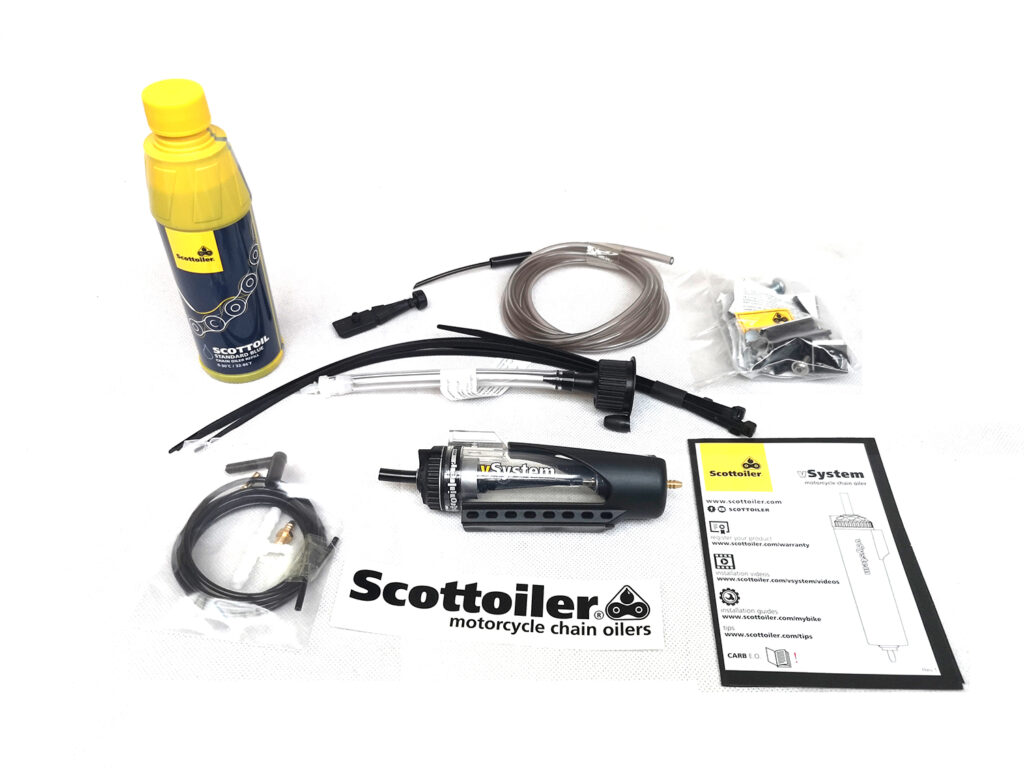
Some key benefits for your bike include:
- Automated lubrication: Delivers the right amount of oil without rider intervention.
- Reduced friction: Ensures smooth operation by keeping the chain well-lubricated.
- Extended chain life: Regular lubrication prevents wear, increasing the chain’s longevity.
- Improved performance: Reduces power loss by maintaining optimal chain efficiency.
- Enhanced safety: A properly lubricated chain prevents sudden failures.
- Eco-friendly: Uses minimal oil, reducing waste compared to spray lubricants.
We find a tool like Scottoiler to be incredibly useful for riders that are on-the-go and want a more seamless way to ensure their chain is well lubricated. You can buy their best selling product, the vSystem, here.
In fact, the vSystem has become so popular for the reasons above that Scottoiler has partnered with BMW Motorrad since 2009 and KTM since 2021 as an official accessory provider. So you can rest assured that if these top manufacturers have put their trust in this incredibly useful chain oiler, you can too. (Oh, and did we mention that the vSystem is universal as well?)
How does the Scottoiler work?
The vSystem is a vacuum-operated chain oiler. This means it uses engine vacuum to operate a gravity-fed system. It does so by connecting to the engine’s vacuum line when the engine is running. This creates a pressure differential that opens a valve; ultimately allowing the oil to flow freely. From there, a small nozzle, generally located on the rear sprocket, dispenses the oil onto the chain rollers.
Scottoiler also offers two electrical versions as well: the eSystem and xSystem. These both use an electric pump to deliver oil to the chain (unlike the vSystem, which uses a vacuum). They are designed to automatically lubricate the chain when the motorcycle is moving and connect directly to the battery.
The xSystem is the latest in the Scottoiler lineup. It is recognized for using less power while also having a faster response rate. One major additional improvement is the new “Switched Live” connection, which allows riders to easily integrate their Scottoiler with a pre-existing accessory manager.
How to Install the Scottoiler
Installing Scottoiler is a straightforward process, with different models available for different bikes. Once installed, don’t forget to periodically check the oil level and adjust the flow rate based on riding conditions. These regular inspections will ensure optimal performance and longevity.
Here’s an overview of how to install the vSystem:
Remember that a vSystem motorcycle chain oiler means you have a system that automatically goes to work when you start your motorcycle. Though it is operated by the engine vacuum, the vSystem oiler won’t absorb any power or affect the performance of your engine thanks to how it is built.
And of course, if you have any questions, don’t hesitate to reach out to us. We’ll be happy to walk you through the process in more detail, as well as answer any more general questions you have about chain maintenance.
Next Steps for Chain Maintenance
If this article has inspired you to check on your chain before your next ride, we are glad to hear it. If it has convinced you to check it regularly, even better.
But we understand that the latter can eat into precious time that could be spent riding. If that sounds familiar, Scottoiler is the product you need for your bike.
No matter what you choose, just remember that by prioritizing maintenance now, you will likely save time and money down the line. Which means you’ll have more to spend on your favorite motorcycle luggage, accessories, and more.
Did you like this post? You might also enjoy:
- How to Choose a Motorcycle Tail Bag
- 14 of the 2025 Motorcycles You Can’t Miss
- The Essential Guide to Motorcycle Packing

